
Simplify MedTech with 3D Medical Animation
In the medical industry, innovation moves fast. New surgical robots, implants, and diagnostic tools are launching every day. However, the more advanced the technology, the harder it is to explain.
A brochure cannot explain how a microscopic stent expands inside an artery. A PowerPoint presentation cannot fully demonstrate the precision of a robotic arm.
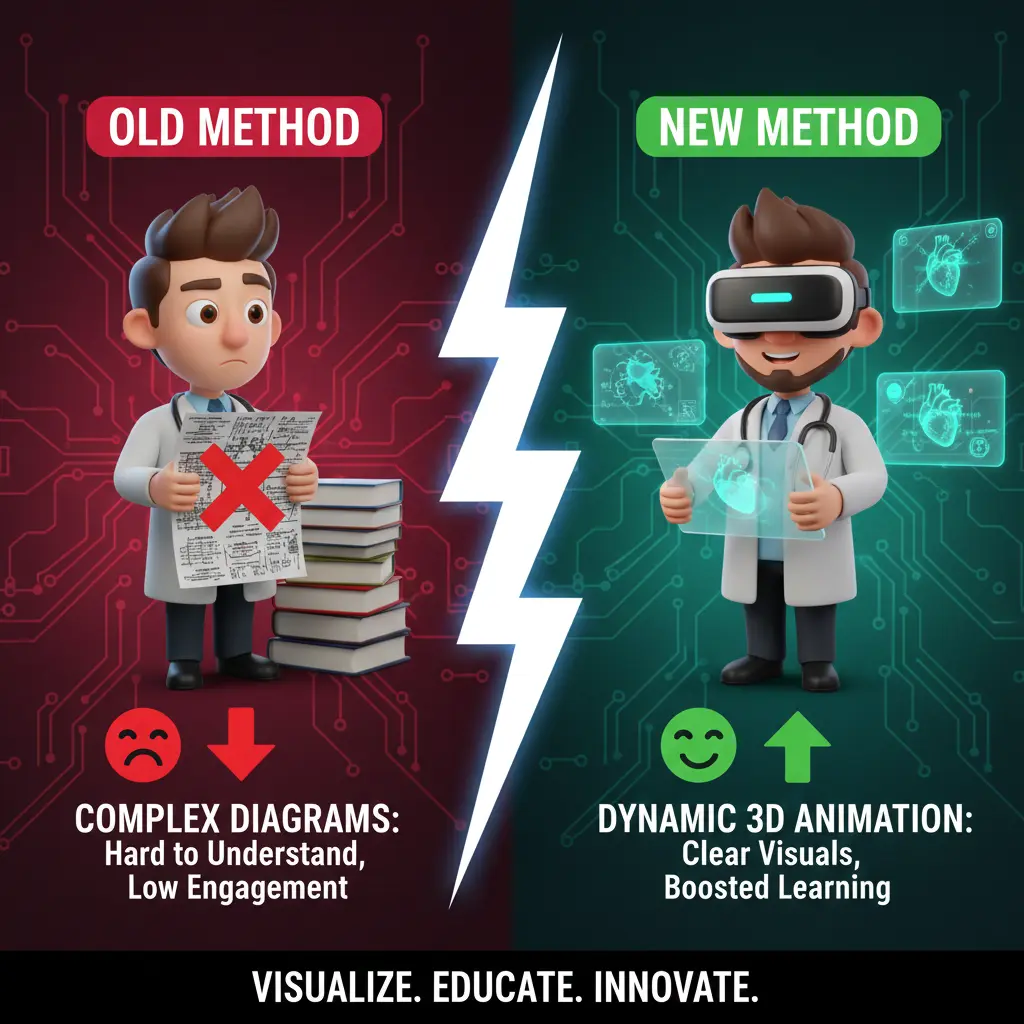
This is why MedTech companies are turning to 3D Medical Animation. It bridges the gap between complex engineering and human understanding. Here is how 3D animation is revolutionizing medical marketing and education.
1. Visualizing the Mechanism of Action (MOA)
The most critical question for any new medical device or pharmaceutical is: “How does it work?”
Explaining a “Mechanism of Action” (MOA) often involves microscopic processes that are invisible to the naked eye. You cannot film a drug molecule binding to a receptor or a nanobot navigating the bloodstream.
3D animation makes the invisible visible. It allows you to:
- Zoom into the cellular level to show drug interactions.
- Use transparency to show a device deploying inside an organ.
- Slow down rapid processes to explain them step by step.
This clarity is essential for convincing doctors and regulatory bodies of your product’s efficacy.
2. Risk-Free Surgical Training
Introducing a new surgical tool requires training surgeons on how to use it safely. Traditional training involves cadavers or live animals, which is expensive, ethically complex, and logistically difficult.
3D animation provides a pristine, repeatable training tool. A surgeon can watch a high-definition, step by step animation of the procedure on their tablet before stepping into the operating room.
- Correct Usage: Demonstrate exactly how to hold and maneuver the device.
- Safety Zones: Highlight nerves or vessels to avoid in bright colors.
- Error Prevention: Show common mistakes and how to correct them.
This standardizes training and reduces the learning curve for medical professionals.
3. Reducing Patient Anxiety
Medical procedures are scary for patients. When a doctor says, “We need to insert a catheter,” the patient often imagines the worst.
A gentle, simplified 3D animation can explain the procedure without the gore of real surgery. By showing a clean, schematic representation of what will happen, you demystify the process.
- Clarity: The patient sees exactly where the device goes.
- Comfort: Understanding the procedure reduces fear and increases consent rates.
- Communication: It serves as a visual aid for doctors to explain treatment plans effectively.
4. Pitching to Investors
Investors are not always scientists. If you are a MedTech startup pitching a revolutionary heart valve, you need to make the concept instantly understandable to a venture capitalist.
A 60-second 3D animation can explain the problem and your solution better than a 20-page technical whitepaper. It brings the “Wow Factor” to your pitch deck, showing the sleek design and functional brilliance of your invention in a way that static diagrams cannot.
5. Marketing at Medical Conferences
Medical trade shows are crowded and competitive. Attendees walk past hundreds of booths.
A static poster with text will be ignored. But a large screen playing a looping 3D animation of a spine implant in motion stops traffic. It draws people in and gives your sales team a perfect opening to start a conversation.
Conclusion
In the world of life sciences, clarity saves lives and sells products. 3D medical animation is the most powerful tool available to translate complex medical data into a compelling visual story that doctors, patients, and investors can understand instantly.
Multiverzz Studio creates scientifically accurate 3D medical animations for device manufacturers and pharma companies. Simplify your science today.