
Sell Automation: 3D Animation for Industrial Robotics
Selling industrial robots and automation systems is not about selling a machine it is about selling efficiency. Factory owners want to know How fast is it? Is it safe? and Will it fit in my production line?”
Filming a high speed robot in a factory is difficult. The movements are often too fast for the human eye to follow, and safety cages block the view.
To demonstrate the true capability of automation, manufacturers are turning to 3D Technical Animation. Here is how 3D helps you visualize the future of manufacturing.
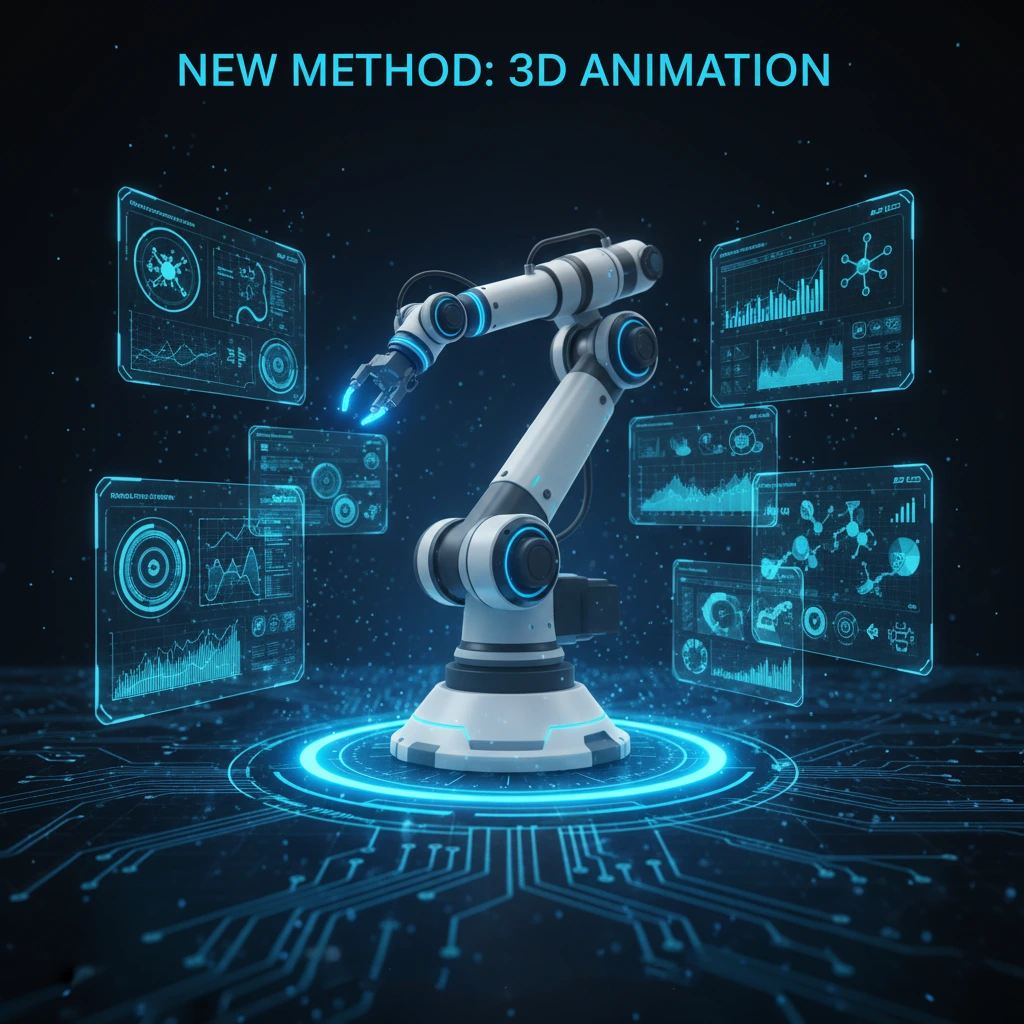
1. Visualizing High-Speed Precision
Industrial robots move at blinding speeds. A “Pick and Place” robot might move 100 times a minute. On video, this looks like a blur.
3D animation allows for Controlled Time.
- Slow Motion: Slow down the action to show the gripper picking up a delicate microchip with absolute precision.
- The Path: Visualize the exact trajectory of the arm to prove it won’t collide with nearby equipment.
- Repeatability: Use ghosting effects to show the robot hitting the exact same millimeter spot thousands of times in a row.
2. X-Raying the Gearbox (The Core)
The reliability of a robot comes from its motors and gears. Customers need to trust that the joints won’t fail.
You cannot open a motor while it is running. 3D animation solves this.
- Internal View: Peel back the metal casing to reveal the high torque planetary gears inside.
- Lubrication: Visualize the oil flow protecting the gears during high speed operation.
- Heat Management: Show how the cooling system keeps the motors running 24/7 without overheating.
3. Demonstrating Safety Zones (Cobots)
Collaborative Robots (Cobots) are designed to work alongside humans. Safety is the #1 selling point.
It is dangerous to film a human getting too close to a moving robot just to prove a point. 3D animation simulates these scenarios safely.
- Invisible Barriers: Visualize the digital “Safety Zone” around the robot.
- Collision Detection: Show the robot sensing a human hand and stopping instantly before contact.
- Sensor Logic: Highlight the LiDAR or vision sensors scanning the environment in real time.
4. System Integration (The Big Picture)
A robot rarely works alone. It is part of a larger ecosystem of conveyors, sensors, and packers.
Setting up a full production line just for a demo video is impossible. With 3D, we can build a Virtual Factory.
- Workflow: Show raw materials entering the conveyor, the robot processing them, and the final product being palletized.
- Scalability: Show how adding a second or third robot doubles the output speed.
5. Visualizing ROI (Return on Investment)
Automation is expensive. Buyers need to see the payback.
3D animation can visualize efficiency data.
- Comparison: Split the screen. Show “Manual Labor” on the left (slow, error prone) and “Robotic Automation” on the right (fast, perfect).
- Output Counters: Use on screen counters to show the robot producing 500 units while the manual method produces only 50.
Conclusion
In the world of Industry 4.0, clarity is your competitive advantage. 3D animation strips away the complexity of robotics, revealing the speed, safety, and profitability that factory owners are looking for.
Multiverzz Studio visualizes the speed and precision of industrial automation. Accelerate your sales today. Contact us.