
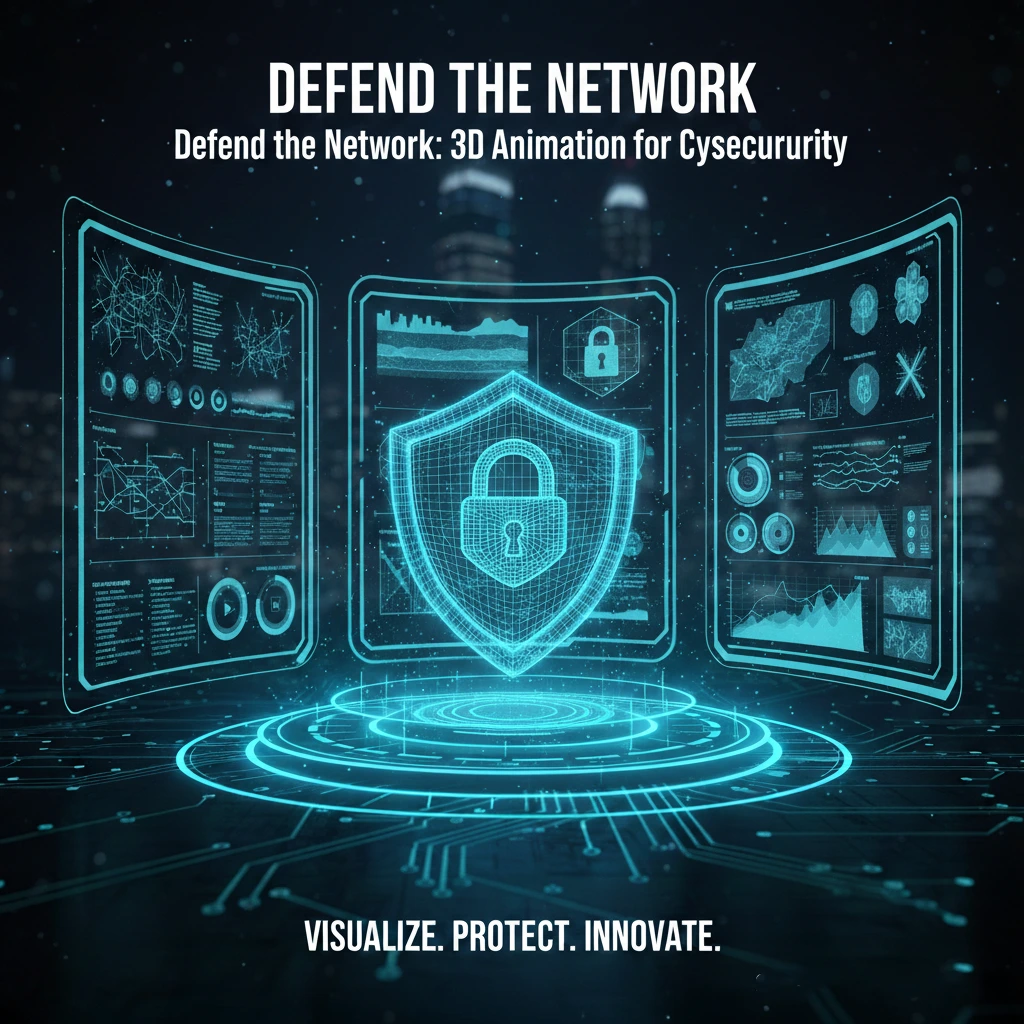
Defend the Network: 3D Animation for Cybersecurity
Selling cybersecurity software is unique because you are selling protection against an invisible enemy. You cannot photograph a DDoS Attack.You cannot film Ransomware locking a file.
To the average buyer, cybersecurity is just lines of code. It is abstract and boring until they get hacked.
To explain complex digital threats and solutions, tech giants like CrowdStrike, Palo Alto Networks, and Cisco rely on 3D Abstract Animation. Here is how 3D helps you visualize the invisible war for data.
1. Visualizing the Threat (The Digital Virus)
Fear motivates action. But describing a Trojan Horse in text doesn’t create urgency.
3D animation brings the threat to life.
- The Infection: Visualize malware as glowing red spikes or insects infiltrating a clean blue network.
- The Spread: Show the red infection jumping from one node (computer) to another instantly, visualizing the speed of a breach.
- The Lock: Animate files being wrapped in heavy digital chains to represent a Ransomware attack.
2. The Shield (Firewall & Protection)
How do you show your software stopping the attack?
3D animation creates a hero moment.
- The Barrier: Visualize a glowing, impenetrable force field (Firewall) detecting the red malware and bouncing it off.
- AI Defense: Show a Digital Sentry (your AI algorithm) scanning traffic, identifying the intruder, and neutralizing it with a laser-like focus.
- The Clean: Watch the red infection dissolve, leaving the network pristine and safe.
3. Visualizing Encryption (The Tunnel)
End to End Encryption is a buzzword. Customers want to know their data is safe.
3D animation explains the tunnel.
- The Data: Visualize emails or credit card numbers as floating data packets.
- The Scramble: Show the packets entering a tunnel and being scrambled into complex, unreadable 3D geometry (encryption).
- The Key: Show the data exiting the tunnel and unlocking only with the correct digital key, proving privacy.
4. Cloud Architecture (The Stack)
Modern software lives in the cloud. Explaining Serverless Architecture or Kubernetes Containers to a non technical CEO is hard.
3D animation builds the infrastructure visually.
- The Stack: Visualize the layers of the cloud (Infrastructure, Platform, Software) as floating, modular platforms connecting seamlessly.
- Scalability: Show the stack growing vertically and expanding horizontally instantly as traffic increases.
5. UI/UX in 3D Space (The Dashboard)
Cybersecurity is managed through a dashboard. Screen recordings are flat and dull.
3D animation creates a Cinematic UI Tour.
- Floating Screens: Break the dashboard elements apart into floating 3D layers to show depth and complexity.
- Real-Time Alerts: Animate a Threat Detected alert pulsing on the screen to show how quickly your software notifies the admin.
- Global Map: Zoom out to a holographic globe showing threat levels across different countries.
Conclusion
In the digital world, seeing is understanding. Your marketing needs to turn abstract code into a compelling visual story of Good vs. Evil. 3D animation allows you to make the invisible threats scary and your solution the undeniable hero.
Multiverzz Studio creates futuristic, high tech 3D animations for the cybersecurity and SaaS industry. Visualize your defense. Contact us today.