
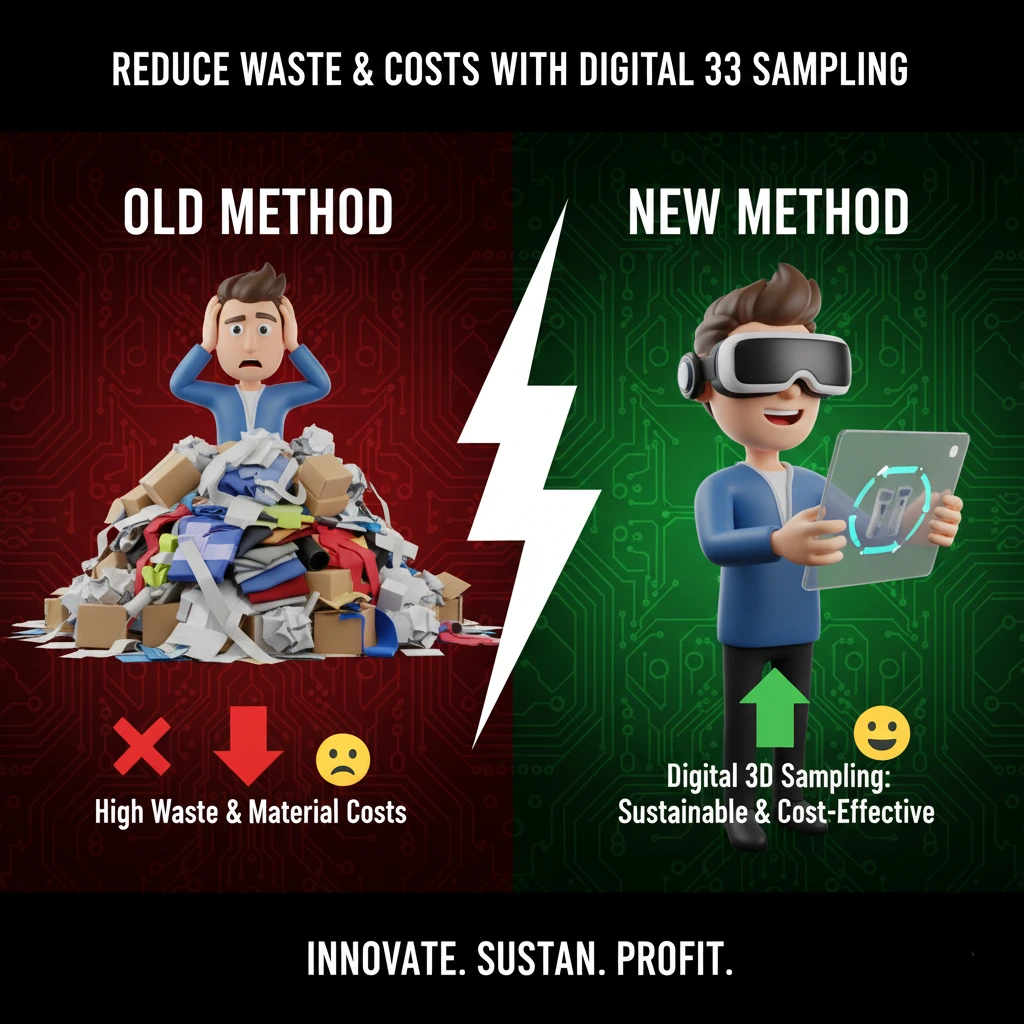
Reduce Waste & Costs with Digital 3D Sampling
Sustainability is no longer just a buzzword. it is a business requirement. Consumers, especially Gen Z and Millennials, are demanding that brands reduce their environmental impact.
However, the traditional product development and marketing cycle is inherently wasteful. Manufacturing prototypes, shipping them across oceans for approval, and building elaborate physical sets for photoshoots creates a massive carbon footprint.
There is a greener way. Digital 3D Sampling is allowing brands to cut waste without cutting quality. Here is how switching to 3D helps the planet and your profit margins.
1. Eliminate the “Shipping Cycle”
In traditional retail, a single product might go through 5-10 rounds of physical sampling. Each sample is manufactured in a factory, wrapped in plastic, and flown via air cargo to the headquarters. If the color is slightly off, the entire process repeats.
With 3D visualization, this loop becomes virtual.
- Instant Approval: Review the texture, fit, and color on a screen instantly.
- Zero Emissions: No airplanes or trucks are needed to transport a digital file.
By moving the approval process to the cloud, you drastically reduce your Scope 3 carbon emissions.
2. No More “Throwaway” Sets
Consider a furniture catalog photoshoot. You build a fake living room set using wood and drywall, paint it, shoot the photos, and then tear it all down and throw it in a dumpster. This happens thousands of times a day in the marketing industry.
3D rendering generates these environments digitally. We can create a photorealistic forest, a luxury apartment, or a beach scene without using a single piece of wood or plastic. It is 100% zero waste content creation.
3. Digital Inventory & On-Demand Production
Overproduction is the fashion and retail industry’s biggest sin. Brands often manufacture thousands of units just to stock shelves, only to burn or landfill unsold inventory later.
3D assets allow for a “Sell First, Make Later” model. You can launch a product on your website using high quality 3D renders before mass production begins. If the 3D image doesn’t generate sales, you don’t manufacture the product. This prevents tons of unwanted goods from ending up in landfills.
4. Attracting the Eco-Conscious Consumer
Your customers care about your supply chain. Being able to say, “Designed digitally to reduce waste” is a powerful marketing message.
Brands like Nike and Tommy Hilfiger are already promoting their use of digital design to show their commitment to sustainability. Using 3D animation allows you to market your brand not just as innovative, but as responsible stewards of the environment.
5. Reducing Chemical Waste
Physical dyeing and material testing involve toxic chemicals and water waste. To test a new color on a fabric, you have to dye real cloth.
In 3D, changing a fabric from Blue to Red is just a change in hex code. It requires no water, no dye, and no chemical runoff. You can experiment with infinite colorways without polluting a single drop of water.
Conclusion
Going green doesn’t mean sacrificing quality. In fact, Digital 3D Sampling offers higher quality visuals while significantly lowering your environmental footprint. It is one of the rare business decisions that is good for the earth and good for the bottom line.
Multiverzz Studio helps sustainable brands visualize their future with zero-waste 3D solutions. Let’s build a greener brand together. Contact us today.