
Test Your Product Design with Virtual Prototyping
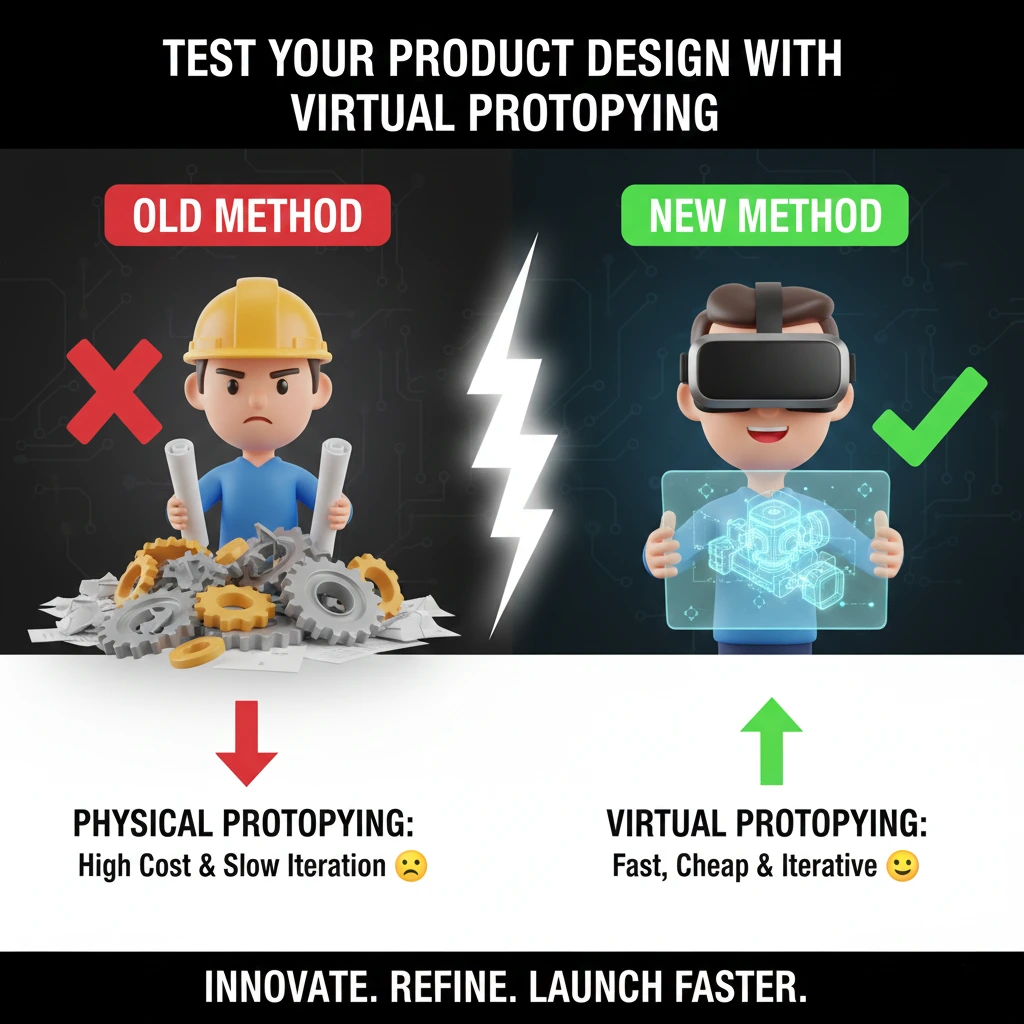
Developing a new product is expensive. The traditional cycle involves designing, building a physical prototype, finding errors, and then rebuilding it again. Each round of physical prototyping costs thousands of dollars and weeks of waiting.
What if you could perfect your product before the first mold is ever cut?
This is the power of Virtual Prototyping. By creating a “Digital Twin” of your product in 3D, you can test, refine, and validate your design instantly. Here is why modern brands are skipping the physical sample phase.
1. Speed Up Your R&D Cycle
Time is the most valuable asset in product development. Waiting for a factory in China to ship a sample to the USA takes time. If the color is wrong, you wait another month for the next version.
With Virtual Prototyping, changes happen in real time.
- Want to see it in matte black instead of gloss? Done in seconds.
- Need to check if the lid fits the jar? We simulate the fit instantly.
This allows your R&D team to iterate through 50 different design variations in the time it takes to build one physical sample.
2. Identify Flaws Early
Physical prototypes often hide internal flaws. You might not realize a wall thickness issue until the product cracks during stress testing.
3D simulation allows for “Stress Testing” in a digital environment. We can visualize:
- Interference: Check if two moving parts collide internally.
- Ergonomics: Visualize the product in a human hand to check scale and grip.
- Assembly Logic: Verify that the product can actually be assembled in the order you planned.
Catching these errors digitally saves massive re tooling costs later.
3. Market Testing Before Manufacturing
The biggest risk in business is manufacturing a product that nobody wants.
With photorealistic 3D rendering, you can create marketing images that look 100% real. You can use these images to run Facebook ads or surveys to see which design customers prefer.
- A/B Testing: Show customers two versions of a sneaker (e.g., Red vs. Blue) and see which one gets more clicks.
- Pre-Orders: Launch a landing page and collect emails to validate demand before investing in inventory.
4. Massive Cost Savings
A single high fidelity physical prototype can cost $2,000 to $10,000 depending on the complexity (CNC machining, 3D printing, painting).
A 3D virtual prototype costs a fraction of that and offers infinite flexibility. You eliminate shipping fees, customs duties, and material waste. For startups with limited budgets, this is the smartest way to allocate funds.
5. Better Communication with Factories
factories often misunderstand 2D sketches. If you send a vague drawing, you get a vague product.
Sending a 3D file (along with 360 degree render videos) gives the factory an exact blueprint of what you want. They can see the surface finish, the texture, and the assembly mechanism clearly. This reduces miscommunication and ensures the “First Gold Sample” comes back perfect.
Conclusion
The days of guessing and waiting are over. Virtual Prototyping gives you the power to design faster, fail cheaper, and launch smarter. Don’t commit to a mold until you have perfected the Digital Twin.
Multiverzz Studio helps innovative brands visualize and test their products virtually. Save time and money on your next launch contact us today.